
Utilities are facing a slow-motion knowledge crisis. The Center for Energy Workforce Development (CEWD) reports that many utilities expect to lose a large share of their workforce — commonly cited as up to ~50% — to retirement within 5–10 years, and skilled trades like line workers and technicians remain among the hardest roles to fill. When a 30-year veteran retires, decades of hard-won judgment about specific equipment, sites and failure modes can walk out the door with them.
You can’t hire your way out of this fast enough. But you can change how expertise is distributed — so the knowledge that remains reaches every crew, on every job, without the expert having to be there in person.
Why traditional knowledge transfer falls short
Shadowing, classroom training and thick manuals all assume time the workforce no longer has. Senior experts are stretched thin, new hires are scarce, and the most valuable knowledge — how to diagnose an unusual fault on a specific asset — is exactly the kind that’s hard to write down. The result is repeat truck rolls (a junior crew can’t solve it, so a specialist is sent later) and slow ramp-up for new technicians.
Expert-on-demand: one expert, every job
Visual support turns scarce expertise into a shared resource:
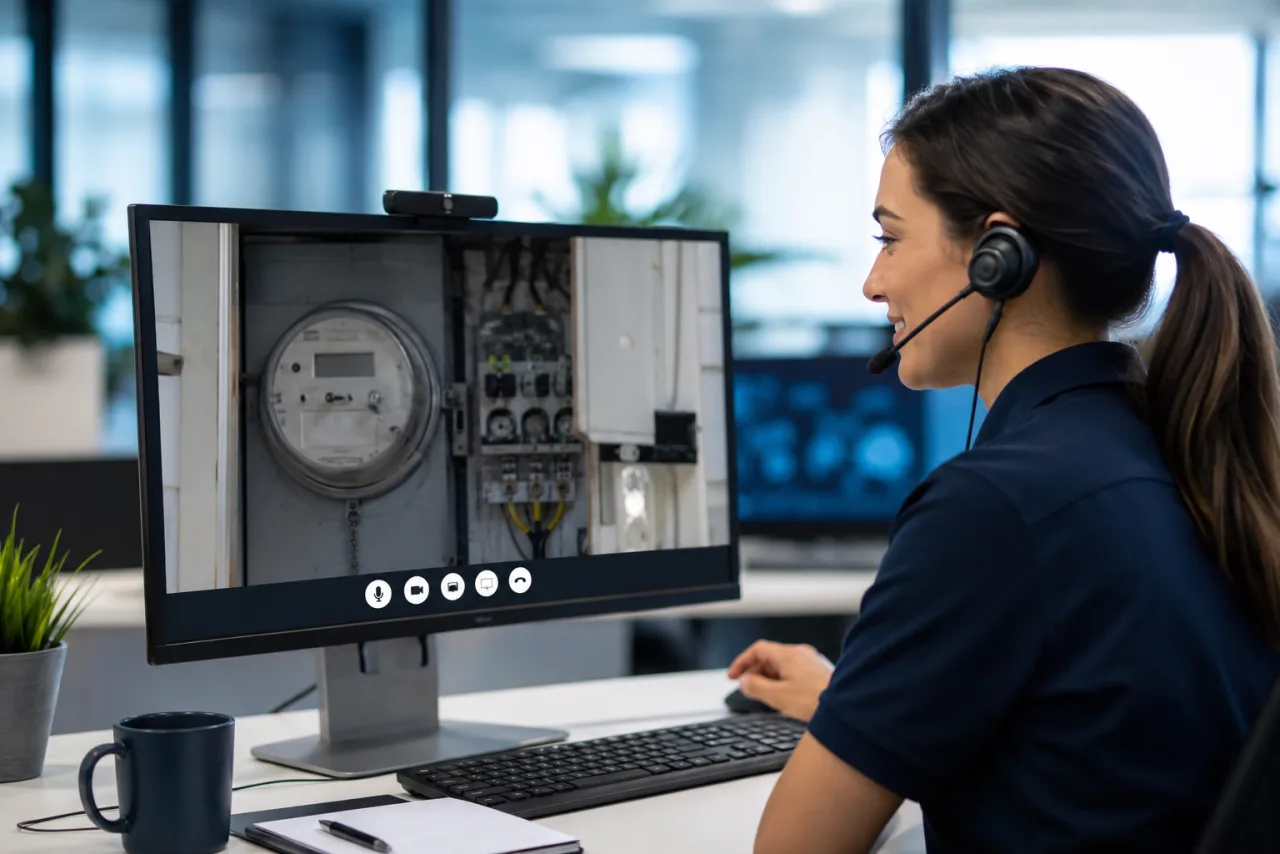
- See the field worker’s view. Through a phone or hands-free smart glasses (RealWear, Vuzix and similar), a remote expert sees exactly what the crew sees.
- Guide live with AR. The expert points to the right component, annotates the live image, and walks the worker through the procedure step by step.
- Multiply reach. One expert supports many crews across many sites in a day — no travel — so a handful of senior people can effectively be everywhere.
- Train on real jobs. New technicians build competence on live work with a safety net, ramping far faster than classroom-only programs.
Capturing knowledge before it retires
Real-time guidance solves today’s job; the bigger prize is institutional memory. With session recording and AI knowledge capture (VSight VideoFlow), the expert guidance delivered on a live job becomes a reusable asset — a step-by-step guide, an annotated reference, a searchable answer the next worker can use without pulling the expert in again. Over time the organization’s hardest-won knowledge is captured as structured, reusable guidance instead of living only in a few people’s heads.
The compounding payoff
- Fewer repeat dispatches — junior crews resolve more on the first visit with expert backup.
- Faster ramp-up — new hires become productive sooner.
- Resilience — the retirement of any one expert no longer removes a critical capability.
- Safety — less improvisation on unfamiliar or hazardous work (see remote inspection for safety).
A day with expert-on-demand
Picture one of a utility’s few remaining senior substation experts. Without visual support, their day is spent driving between sites — a few jobs, hours lost to travel, and crews elsewhere waiting or guessing. The expertise is real but rationed by geography.
With expert-on-demand, the same expert works from a desk: a crew in the north shares their smart-glasses view for a tricky relay; thirty minutes later the expert guides a southern crew through an unfamiliar breaker; in between, they review a junior technician’s inspection live. The same person now touches a dozen jobs across the service territory in a day, and every interaction is recorded for the next person who hits the same problem. The constraint shifts from “where can the expert physically be” to “how many calls can they take” — a far higher ceiling.
Turning sessions into a knowledge base
The strategic payoff is cumulative. Each guided session is a documented answer to a real field problem. Captured and organized (with tools like VSight VideoFlow), those sessions become a searchable library: the right way to service a specific asset, the safe sequence for a specific task, the fix for a recurring fault. New hires learn from real jobs rather than generic manuals, and the organization’s expertise stops being a function of who happens to still be employed. In an industry facing a retirement cliff, that institutional memory is as valuable as the live guidance itself.
Getting started with expert-on-demand
The shift from “experts travel to jobs” to “expertise travels to crews” is more operational than technical, and it pays off fastest when rolled out deliberately:
- Identify your scarce experts and high-variability work. The biggest wins are the tasks where only a few people know the answer and a wrong move means a repeat trip or a safety risk.
- Equip the field for hands-free. Smart glasses let a worker keep both hands on the task while the expert sees their exact point of view — essential for complex or safety-critical jobs.
- Make escalation the default, not the exception. Train crews to pull in a remote expert the moment they’re unsure, instead of guessing or booking a second visit.
- Record and organize from day one. Every guided session is potential training material; capturing it turns one expert’s help into a reusable answer for everyone.
Measuring knowledge transfer
The payoff shows up in metrics that traditional training rarely moves: a falling repeat-dispatch rate (junior crews resolving more themselves), shorter time-to-competency for new hires, and a growing library of captured procedures. Tracking these makes the case that expert-on-demand isn’t just a support tool — it’s a workforce-resilience strategy for an industry losing decades of experience to retirement.
Frequently asked questions
How serious is the utility workforce shortage? CEWD reports many utilities expect to lose a large share of their workforce — commonly cited as up to ~50% — to retirement within 5–10 years, with skilled trades among the hardest roles to fill.
How does visual support help with knowledge transfer? A remote senior expert sees exactly what a junior field worker sees — by phone or hands-free smart glasses — and guides them in real time. Recorded sessions become reusable guidance, capturing expertise before it retires.
Does the expert have to travel to the site? No. One remote expert can support many crews across many sites in a day without traveling, multiplying the reach of scarce senior knowledge.
Key takeaways
- Up to ~50% of the utility workforce may retire within 5–10 years (CEWD), putting expertise at risk.
- Traditional training can’t keep pace; the fix is distributing expertise, not just replacing headcount.
- Expert-on-demand lets one senior expert guide many crews live via phone or smart glasses — and recorded sessions capture the knowledge reusably.
- The payoff compounds: fewer repeat dispatches, faster ramp-up, resilience and safety.
See our utilities & energy visual support page, or read about reducing truck rolls and remote inspection for safety.
Request a demo to see expert-on-demand in action.