
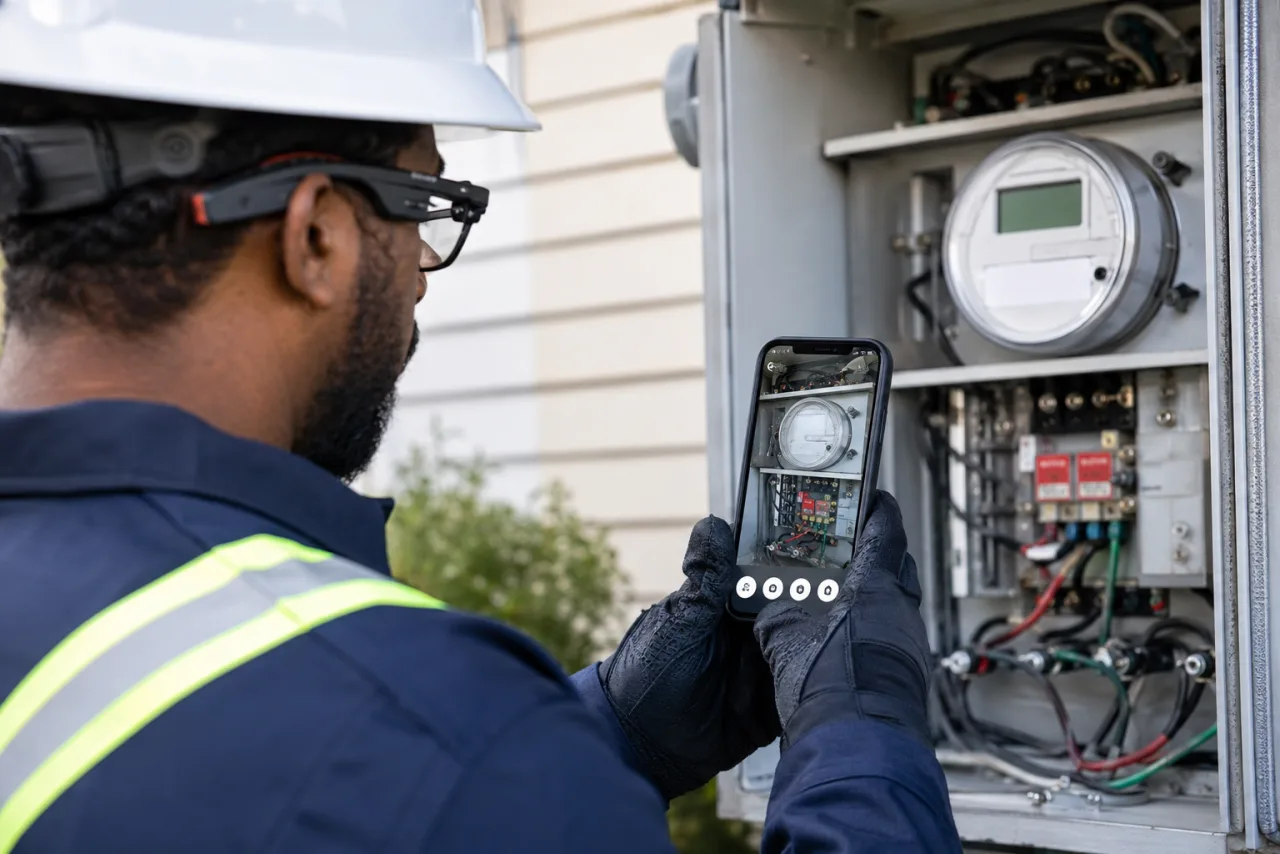
Utility field work carries real physical risk. U.S. Bureau of Labor Statistics data has consistently ranked electrical power-line installers and repairers among the ten most dangerous occupations in the country, with a fatal injury rate around 19–20 per 100,000 workers — roughly five to six times the all-worker average. The Electrical Safety Foundation International (ESFI) reports that overhead power-line contact is the single leading cause of workplace electrical fatalities. In this environment, anything that reduces unnecessary exposure or improvisation on hazardous tasks is a safety win.
Remote visual inspection is one of those things. By letting a remote expert see and assess a situation live, it reduces both the number of people in the danger zone and the amount of guesswork on unfamiliar or high-risk work.
Where remote visual support reduces risk
Fewer people exposed
For inspections and assessments that today require sending a specialist to a hazardous site, a remote visual inspection lets that expert assess the situation through a field worker’s camera or smart glasses — without a second person entering the danger zone.
Less improvisation on unfamiliar work
Many incidents happen when a worker is unsure and improvises. With a remote expert watching live, the crew gets the correct, safe procedure confirmed before acting — particularly valuable as experienced workers retire and less-seasoned crews take on complex jobs.
Verify conditions before work proceeds
The expert can confirm de-energization indicators, PPE, clearances and site conditions on the live video, adding a second set of trained eyes to safety-critical checks.
Hands-free for safety-critical tasks
On hands-free smart glasses, the field worker keeps both hands on the task and both eyes on the hazard while the expert guides — no need to stop, hold a phone, or look away.
Safety and efficiency together
The safety case and the operational case reinforce each other. The same remote inspection that keeps a worker out of harm’s way also avoids a truck roll and speeds the job. And capturing these sessions builds a library of correct, safe procedures — useful both for training new crews (important given the aging-workforce wave) and for documenting that safe practices were followed.
Building it into safety programs
- Define high-risk tasks where a remote expert should be on the line before work proceeds.
- Equip for hands-free with smart glasses for safety-critical jobs.
- Record for documentation — keep an auditable trail that procedures were followed.
- Feed lessons back into training and standard work.
A safer inspection, in practice
Consider a routine but hazardous task: assessing a damaged pole-top transformer after a storm. The traditional approach may send a specialist to climb or bucket up for a closer look before the repair crew even knows what they’re dealing with — exposure that exists purely to see the problem.
With remote visual inspection, a single ground-based crew member (or a drone-fed feed, where used) shows the transformer to a remote expert who assesses the damage live, annotates what matters, and confirms the safe repair sequence — before anyone goes up. The assessment that used to require an extra person in an elevated, energized environment now happens with eyes, not bodies, in the danger zone. When the repair proceeds, it proceeds with a confirmed plan rather than on-the-spot improvisation.
Safety culture, documented
Beyond preventing individual incidents, recorded remote inspections strengthen the broader safety program. Each session documents that the correct procedure and clearances were confirmed, builds a library of how high-risk tasks should be done, and gives safety teams real footage to use in training. For an industry where the fatal-injury rate for line workers sits among the nation’s highest, embedding a “remote eyes first” step into hazardous workflows is both a protective control and an auditable record that it was followed.
Where remote inspection fits in the work-management flow
Remote visual inspection delivers the most safety value when it’s built into the workflow rather than bolted on. Three natural insertion points:
- Before dispatch (assess): for damage reports and fault calls, a remote look establishes what crew, equipment and precautions the job actually needs — so people arrive prepared rather than discovering hazards on site.
- During the job (verify): at safety-critical steps, a remote expert confirms de-energization, clearances and the correct procedure on the live view before the crew proceeds.
- After the job (document): the recorded session becomes proof that the right steps were followed, feeding incident review and training.
Embedding a “remote eyes first” checkpoint into these moments turns inspection from a separate, sometimes-skipped task into a standard control that happens every time.
Safety and the workforce gap reinforce each other
The safety case is amplified by the aging-workforce wave: as experienced workers retire, less-seasoned crews take on hazardous tasks with less hard-won instinct for what’s dangerous. Remote inspection puts an experienced set of eyes on those jobs without putting another body in the danger zone — protecting newer workers precisely when the depth of field experience is thinning.
Frequently asked questions
How dangerous is utility line work? BLS data has ranked power-line installers and repairers among the ten most dangerous U.S. occupations, with a fatal injury rate around 19–20 per 100,000 — roughly 5–6× the all-worker average. Overhead power-line contact is the leading cause of workplace electrical fatalities (ESFI).
How does remote visual inspection improve safety? It puts expert eyes on a hazard without adding people to the danger zone — assessing the situation live, confirming the safe procedure, and verifying conditions before work proceeds.
Can crews use it hands-free? Yes. On hands-free smart glasses, a worker keeps both hands on the task while a remote expert sees their view and guides them.
Key takeaways
- Power-line work is among the most dangerous US jobs (~19–20 fatalities per 100,000; overhead-line contact is the top electrical-fatality cause — BLS, ESFI).
- Remote visual inspection reduces people in the danger zone and improvisation on hazardous tasks.
- Hands-free smart glasses let crews keep eyes and hands on the work while an expert guides.
- Safety and efficiency reinforce each other — and recorded sessions document safe practice and train new crews.
See our utilities & energy visual support page, or read about reducing truck rolls and the aging workforce.
Request a demo to see remote inspection in action.