
Two numbers sit at the center of every claims operation: cycle time (how long a claim takes to settle) and loss adjustment expense (LAE) (what it costs to handle the claim, separate from the payout itself). They tend to move together — long cycles usually mean more touches, more dispatches and more cost — and both are dominated by one hidden bottleneck: the insurer often can’t see the loss without sending someone to look at it.
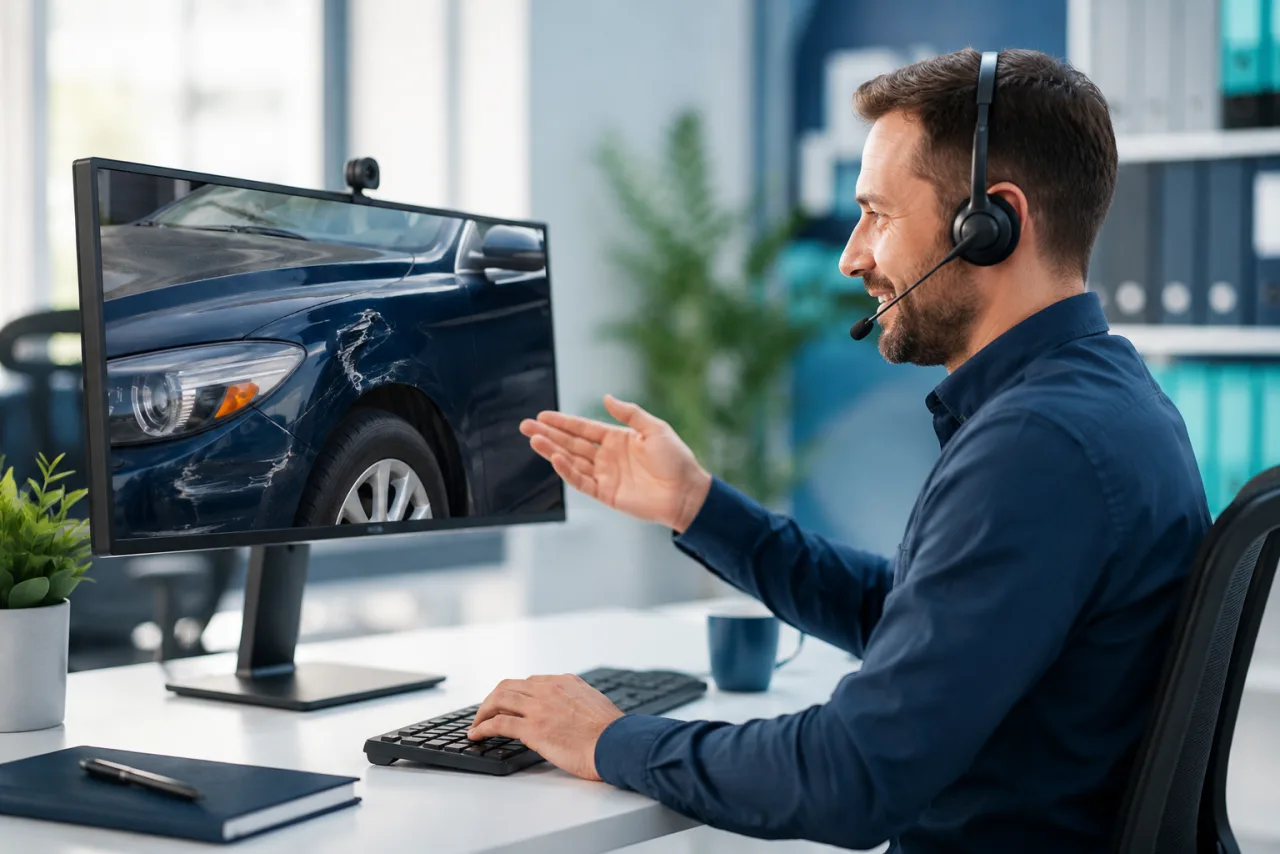
Remote visual inspection removes that bottleneck. When an adjuster can see the damage live through the policyholder’s phone camera at first notice, claims that used to require an in-person visit and days of waiting can be triaged — and often resolved — in minutes. This post breaks down the levers, with the independent industry benchmarks that quantify the opportunity.
Why claims run long and cost too much
A typical claim accumulates cost and delay through:
- Information gaps at FNOL — a verbal description can’t be triaged confidently, so the safe default is to dispatch.
- Scheduling and travel — booking a field adjuster adds days and windshield time.
- Back-and-forth — missing photos and unclear details bounce the claim between handler, customer and adjuster.
- Rework and reopens — an inaccurate first assessment generates follow-ups that quietly inflate both cycle time and LAE.
Each of these traces back to not seeing the loss early and clearly.
The benchmark: how big is the opportunity?
- 25–30% reduction in loss adjustment expense is achievable from end-to-end claims digitization, of which remote/virtual handling is a core lever (McKinsey).
- The auto industry moved from handling under 15% of claims virtually to roughly 60% — proof that a large share of in-person inspection can be removed (LexisNexis Risk Solutions).
- Poor digital claims experiences carry a 52% switch/non-renewal risk versus 4% for excellent ones, so faster, cleaner cycles also protect premium (J.D. Power, 2025).
These are industry figures, not vendor results — but they frame why visual claims handling has become a priority.
The levers that reduce cycle time and LAE
1. See the loss at first notice
Video FNOL lets the handler assess severity immediately and decide — on the first contact — whether a physical inspection is even necessary. Most of the cycle-time savings start here.
2. Eliminate avoidable inspections
For visually assessable losses, a guided remote visual inspection replaces the site visit entirely: the adjuster directs the camera, annotates the damage, and captures the angles they need. No scheduling, no travel, no multi-day wait.
3. Capture complete evidence the first time
AR-guided capture means the adjuster gets exactly the views and details required, attached to the claim with time and location metadata — which collapses the back-and-forth that stretches cycles and triggers reopens.
4. Straight-through the simple claims
With clear visual evidence, low-severity claims can be fast-tracked or auto-adjudicated, freeing adjusters to spend their time on the complex losses that genuinely need expertise.
Measuring it honestly
Track these together so you improve cycle time and quality, not one at the expense of the other:
- Average cycle time on visually assessable claim types, before vs after.
- In-person inspection rate — the share of claims still requiring a field visit.
- LAE per claim — the all-in handling cost.
- Reopen / supplement rate — your best proxy for whether faster assessments are also accurate.
- Claims CSAT / digital experience score — to confirm speed isn’t hurting the customer.
A healthy program shows cycle time and LAE falling while reopen rate stays flat or improves and CSAT rises.
Why no-app browser capture matters for cost
The cost case depends on adoption. If only a fraction of policyholders can complete a visual session, dispatches and phone tag persist and the savings never materialize. Browser-based capture — a tapped link, no app, no account — is what pushes adoption high enough to actually bend the cycle-time and LAE curves.
A claim, the old way and the new way
Consider a homeowner reporting water damage from a burst pipe.
The old way: The claim is logged from a phone description. Because the handler can’t see the extent, they reserve conservatively and schedule a field adjuster. The visit happens four days later; the assessment and estimate take several more. A missing photo of the source triggers a second contact. The claim settles after two weeks, with the cost of a dispatch and several handler touches baked into LAE.
The new way: At first notice the handler opens a visual session, the homeowner shows the damage and the pipe, and the adjuster annotates the affected area and captures geotagged photos. Severity is assessed on the spot, the reserve is set accurately, and — because the damage is straightforward — the claim is fast-tracked without a site visit. Cycle time drops from weeks to days, and the dispatch cost disappears entirely.
The savings aren’t from cutting corners; they come from replacing guess-and-dispatch with see-and-decide.
Common pitfalls when chasing cycle time
Teams that optimize cycle time in isolation often create new costs. Avoid these:
- Rushing assessments. Speed from poor information causes reopens and supplements that inflate LAE later. Let speed come from better visibility, not pressure.
- Low adoption. If only a fraction of policyholders complete a visual session, dispatches persist. No-app browser access is what makes adoption high enough to move the numbers.
- Ignoring the customer signal. Track CSAT alongside cycle time; a faster process that frustrates customers trades a cost metric for a retention problem.
- One-size-fits-all. Reserve visual handling for visually assessable claims; complex investigations still need specialist field work.
Frequently asked questions
What is loss adjustment expense (LAE)? LAE is the cost an insurer incurs to investigate, assess and settle a claim — adjuster time, travel, inspections, administration — separate from the indemnity (the claim payout itself). Remote handling reduces the investigation and inspection portion.
How much can remote visual inspection reduce claims cost? Industry research links end-to-end claims digitization to a 25–30% reduction in LAE (McKinsey). The exact impact depends on how many of your claims are visually assessable and how high policyholder adoption of the visual session is.
Does faster cycle time hurt assessment quality? Not when speed comes from better information rather than rushing. Seeing the damage live and capturing complete, annotated evidence makes first assessments more accurate, which reduces the reopens that lengthen cycles.
Key takeaways
- Cycle time and LAE are dominated by not seeing the loss early — which forces dispatches, delays and rework.
- Remote visual inspection at FNOL removes avoidable inspections and back-and-forth; claims digitization is linked to a 25–30% LAE reduction (McKinsey) and a shift from <15% to ~60% virtual handling (LexisNexis).
- Measure cycle time and LAE alongside reopen rate and CSAT so speed and quality improve together.
- No-app browser capture drives the adoption that makes the savings real.
See the full workflow on our visual claims & video FNOL page, or read about video FNOL and reducing fraud with visual evidence.
Request a demo to see it on your own claims.