
In telecom, first-call resolution (FCR) is more than an efficiency metric — it is a loyalty metric. Subscribers who get their problem solved on the first contact are dramatically more likely to stay, while those forced into repeat calls, escalations, or technician visits are the ones most likely to churn. And churn is most dangerous early: a large portion of broadband cancellations happen in the first 90 days, often triggered by a frustrating activation or a Wi‑Fi problem that took too long to fix.
Why first-call resolution stalls
Most unresolved first calls in telecom have the same root cause: the agent can’t see the problem. Activation and connectivity issues are inherently visual — a cable in the wrong port, a modem that never finished booting, a poorly placed router. Over voice alone, the agent has to guess, and guessing leads to one of three bad outcomes: a wrong fix, an escalation, or a truck roll. All three push resolution past the first call and chip away at the customer’s confidence.
The economics of early churn
It helps to put a number on why this matters. Acquiring a new broadband subscriber — marketing, sales, provisioning, equipment, install — costs far more than retaining an existing one, and that investment is only recouped over many months of service. A customer who churns in the first 90 days leaves before the operator has earned back acquisition cost, turning them into a net loss.
Now connect that to support. The new subscriber’s first real interaction with the brand is often a setup or connectivity call. If that call resolves quickly and cleanly, the relationship starts on trust. If it drags across multiple contacts and a delayed truck roll, the subscriber concludes — in the most expensive possible window — that they chose the wrong provider. First-call resolution, in other words, is one of the most direct levers on early-churn economics that an operator controls.
A visual first call
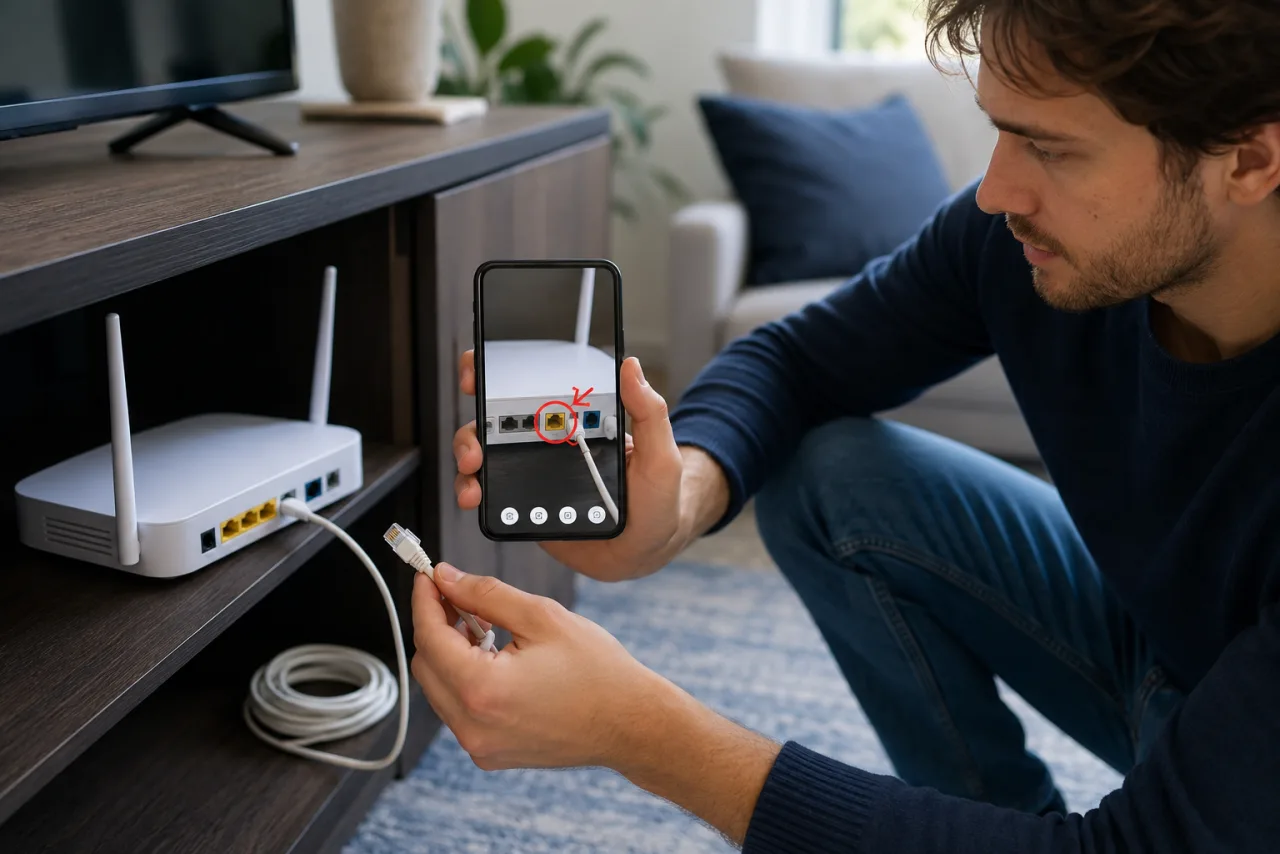
Telecom visual support gives the agent the missing sense — sight. With a single tap on an SMS link, the customer’s phone camera opens in the browser (no app to download), and the agent sees the real setup. Now the first call can actually resolve the problem:
- Activation and self-install: the agent guides the subscriber through unboxing, cabling and setup, pointing to the right port with AR annotations — turning a frustrating self-install into a guided first-call success.
- Connectivity troubleshooting: the agent sees the error lights and home layout and fixes what’s fixable on the spot.
- Confidence: the customer ends the call with a working connection and a clear sense that the operator “got it” — the foundation of loyalty.
Measuring FCR honestly
Many operators overstate their FCR because they measure it loosely — counting a call as “resolved” if the agent believed it was. A more honest definition counts a contact as first-call-resolved only if the same customer does not contact again about the same issue within a set window (commonly 7 days). Measured this way, voice-only technical support often scores far lower than dashboards suggest, because so many “resolved” calls quietly generate a callback.
Visual support improves the real metric, not the vanity one: because the agent confirms the fix on the live video before ending the call, the resolution is verified, not assumed. That is why the gains show up not just in reported FCR but in the downstream signals that actually correlate with retention — fewer repeat contacts and fewer dispatches.
Where visual support has the biggest impact
Not every contact needs a camera. The highest-ROI place to deploy visual support is the cluster of contacts most tied to early churn and most resistant to voice resolution:
- New-subscriber activation and self-install (the first-90-days danger zone).
- “No service” and intermittent-connectivity complaints.
- Wi‑Fi coverage and device-setup issues, including mesh placement.
Targeting these contacts concentrates the benefit where loyalty is won or lost, rather than spreading it thinly across every interaction.
The results
A Tier‑1 telecom operator running VSight Remote lifted first-contact resolution to as high as 80% and recorded an average customer-satisfaction score of 7.8 / 10 across 4,400+ post-session ratings. Subscribers ranked fast resolution, ease of use, and direct visual guidance as the highest-impact factors — exactly the experience that keeps customers from leaving in the early, fragile days of the relationship.
Better FCR also reduces cost: the same program cut field dispatches by 30% and resolved most sessions in 5–7 minutes, so loyalty and efficiency improve together rather than trading off.
What a resolved first call looks like
Picture a new subscriber two days after activation: the internet keeps dropping, and they’re already wondering if they made a mistake. On a voice-only call, the agent runs a reboot script, can’t pinpoint the cause, and books a technician for three days out — the subscriber is now firmly in the danger zone.
With visual support, the same call goes differently. The agent texts a link, the subscriber opens their camera, and within a minute the agent sees the coax barely seated in the splitter. An arrow on the live image shows exactly where to push; the lights go green; a quick speed check confirms it. The subscriber ends the call with working internet, on day two, with the impression that their provider is competent and fast. That single resolved call is often the difference between a customer who stays for years and one who cancels in week three.
How to deploy it for maximum retention impact
Retention-focused teams don’t sprinkle visual support everywhere — they aim it at the moments that decide loyalty:
- Instrument the first 90 days. Flag new-subscriber contacts so agents prioritize a definitive visual fix over a quick deflection.
- Trigger on the right intents. Activation, “no service,” intermittent connectivity, and Wi‑Fi/device setup are the highest-leverage call types.
- Close the loop. Confirm the fix on the live video before ending the call, and log the outcome so repeat-contact tracking reflects reality.
- Review by cohort. Watch 90-day churn for subscribers who had a visual first call vs those who didn’t — that’s the number that ties FCR to revenue.
Why traditional FCR programs plateau
Most operators have already run the standard FCR playbook: more agent training, better scripts, a bigger knowledge base, tighter escalation rules. These help — up to a point — and then first-call resolution flattens. The reason is that none of them address the actual bottleneck on technical calls: the agent still can’t see the problem. You can give an agent the perfect script for “diagnose a Wi‑Fi issue,” but if they’re working from the customer’s verbal description, they’re still guessing.
That’s why FCR initiatives built purely on knowledge and process tend to hit a ceiling. Visual support breaks through it because it changes the information the agent has, not just the instructions. Pair it with the existing playbook — trained agents, good scripts, a strong knowledge base — and each of those becomes more effective, because now they’re applied to a problem the agent can actually observe.
It’s also worth tracking FCR against satisfaction and loyalty signals (CSAT, NPS, 90-day retention) rather than in isolation. FCR that rises while CSAT and retention rise with it is real; FCR that climbs while customers still churn is a measurement artifact.
Frequently asked questions
Why is first-call resolution so important in telecom? Because it correlates directly with retention. Customers whose issue is solved on the first contact are far more likely to stay; repeat contacts, escalations, and truck rolls are leading indicators of churn — especially in the first 90 days.
How is first-call resolution measured accurately? The honest method counts a contact as resolved only if the same customer doesn’t contact again about the same issue within a set window (commonly 7 days), rather than relying on the agent’s judgment at call end.
How does visual support improve FCR specifically? It lets the agent see and confirm the fix live, so resolution is verified rather than assumed — which lifts the real FCR metric and the downstream retention signals that track with it.
Key takeaways
- In telecom, FCR is a loyalty metric: early unresolved contacts drive first-90-day churn.
- Activation and connectivity problems are visual; voice-only agents guess, which produces wrong fixes, escalations, and truck rolls.
- Visual support verifies the fix live — a Tier‑1 operator reached up to 80% FCR and 7.8/10 CSAT.
- Aim visual support at new-subscriber and connectivity contacts, and measure 90-day churn by cohort.
FCR as a churn-prevention strategy
If you treat first-call resolution as a customer-retention investment rather than a call-center stat, visual support becomes a strategic tool, not just an operational one. Solving the problem the first time — visibly, quickly, and without sending a truck — is one of the most direct ways to protect revenue in a market where switching is easy.
Explore visual support for telecom call centers, or read how the same approach reduces truck rolls and cuts average handle time.
Request a demo to see VSight Remote in action.