
Return rates are one of the most underestimated costs in consumer electronics and appliances — and most of the returned products aren’t even broken. Accenture’s widely-cited research found that roughly 68% of consumer-electronics returns are “No Trouble Found” (NTF) — the product works exactly as designed — with only about 5% genuinely defective and around 27% buyer’s remorse. The same research estimated non-defective returns cost the industry more than $17 billion a year.
The cause is rarely the product. It’s that the customer couldn’t set it up, couldn’t get it working the way they expected, or couldn’t describe the problem well enough for a phone agent to help — so they gave up and returned it. Accenture found that about 65% of those non-defective returns happen after the customer struggles with setup, installation or first use. Every one of those is a return a remote expert could have prevented — if they could see what the customer sees.
Why phone and chat support can’t stop NFF returns
A voice or chat agent is working blind. “Which cable goes where?” “What does the screen say?” “Is the light blinking or solid?” The back-and-forth is slow and error-prone, and for a frustrated customer holding a new product, the path of least resistance is the returns label. Self-help articles and manuals help motivated users, but the customers about to return a product are precisely the ones who’ve stopped reading.
How visual support turns returns into resolutions
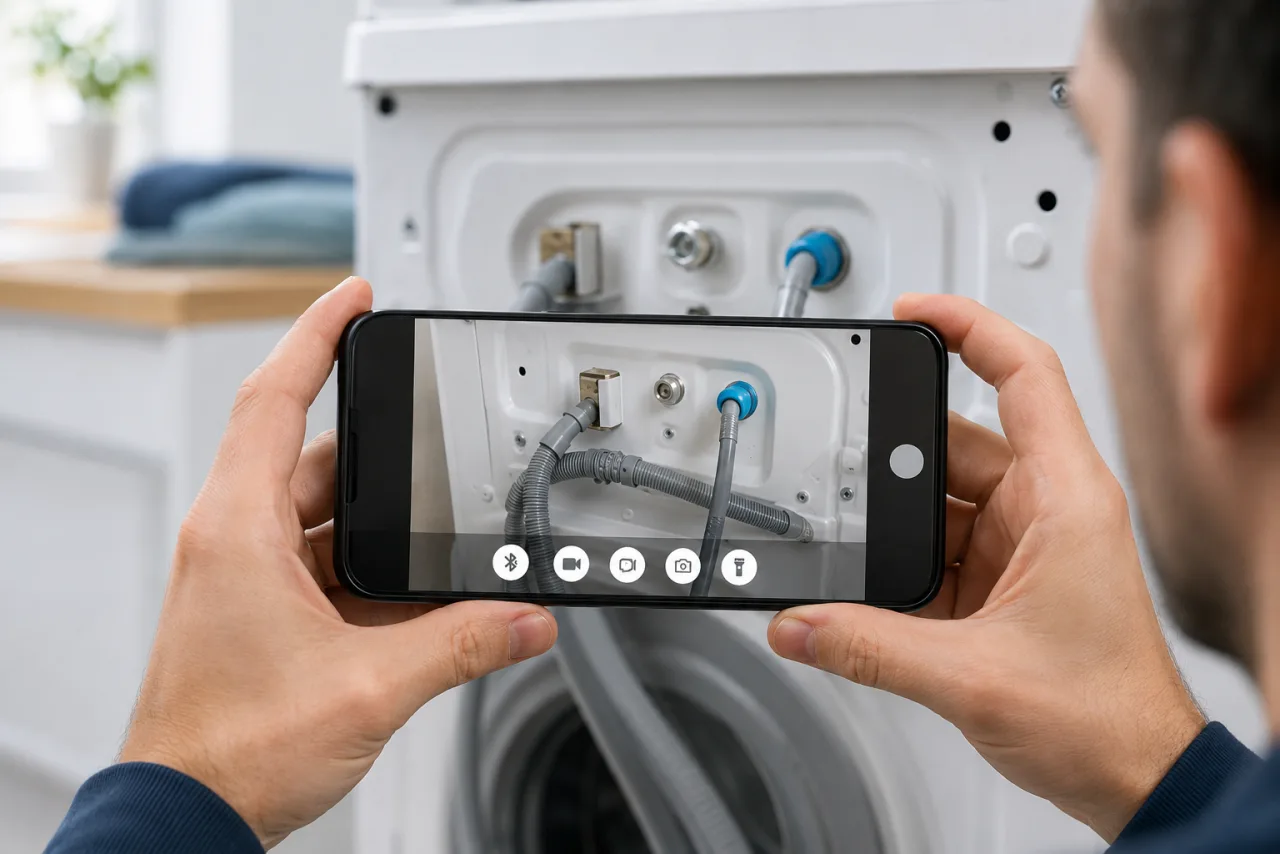
Visual support closes the gap. Mid-conversation, the agent sends a link; the customer taps it and the camera opens in their phone’s browser — no app to download. Now the agent can:
- See the actual setup — the ports, the cabling, the on-screen message, the way the product is installed.
- Guide with AR annotations — point to the exact button, port or step on the live image.
- Confirm it works — verify the product is functioning before ending the session, so the “fault” is genuinely resolved, not just deflected.
What was a return becomes a five-minute first-contact fix — and a customer who keeps the product and trusts the brand.
The economics: small NFF reductions, big numbers
Because the volumes are so large, even modest improvements move real money. Accenture estimated that a 1% reduction in No Trouble Found returns saves a large manufacturer around $21 million (and roughly $16 million for an average retailer). Layer on the avoided reverse-logistics, refurbishment and restocking costs, and the case for resolving setup issues live — instead of accepting the return — is overwhelming.
There’s a second-order benefit too: every visual session is a window into why customers struggle. Patterns across sessions — a confusing cable, an unclear setup step, ambiguous packaging — feed back into better guides, clearer instructions and product improvements that cut returns upstream.
What good looks like
- Trigger early. Offer a visual session at the first sign of a setup or “it doesn’t work” issue, before the customer reaches for the returns label.
- Keep it no-app. Friction kills adoption; a tapped link that opens the browser camera is what gets frustrated customers to actually join.
- Confirm the fix on camera. End the session only when the product is visibly working — that’s what converts a deflected return into a real resolution.
- Mine the sessions. Track recurring setup problems and fix them at the source.
A return that became a fix
Picture a customer who bought a new soundbar. It won’t play sound from the TV, so they’re packing it up to return — convinced it’s faulty. On a phone call, the agent asks which cable is plugged in where; the customer isn’t sure, the descriptions don’t match, and after ten minutes the agent authorizes the return to avoid a frustrated customer.
With a visual session, the same call goes differently: the agent sends a link, the customer points their phone at the back of the soundbar and TV, and within a minute the agent sees the optical cable plugged into the wrong port. An arrow on the live image shows the right one, the customer moves it, sound plays, and the box goes back on the shelf — kept, not returned. The product was never defective; it was a two-minute setup fix that voice support simply couldn’t see.
Multiply that across a returns queue and the pattern is clear: a large share of “defective” returns are working products one guided look away from resolution.
Which products benefit most
Visual support pays off most where setup or operation is the friction point:
- Connected and smart-home devices — pairing, app linking, network setup.
- AV and entertainment — cabling, inputs, configuration.
- Large and built-in appliances — installation, leveling, connections, error codes.
- Anything with a control panel or error display the customer can’t interpret.
For accessories or genuinely simple products, self-help may be enough; reserve live visual sessions for the higher-value, higher-confusion items where a return is both likely and expensive.
Frequently asked questions
What is a No Fault Found (NFF) return? A No Fault Found (or No Trouble Found) return is a product sent back with nothing actually wrong — typically a setup, installation or usage issue rather than a defect. Accenture found roughly 68% of consumer-electronics returns are No Trouble Found, with only about 5% genuinely defective.
How does visual support reduce product returns? Most non-defective returns follow a struggle with setup or first use. Visual support lets an agent see the product live through the customer’s phone camera, guide setup with AR annotations, and confirm it works — turning a likely return into a first-contact resolution, with no app to download.
How big is the cost of non-defective returns? Accenture estimated non-defective returns cost the consumer-electronics industry over $17 billion a year, and that a 1% reduction in No Trouble Found cases saves a large manufacturer roughly $21 million.
Key takeaways
- ~68% of consumer-electronics returns are No Trouble Found — not defective (Accenture); ~65% follow a setup/first-use struggle.
- Phone/chat support can’t fix what it can’t see, so customers return working products.
- Visual support lets agents see the product, guide setup with AR, and confirm the fix — converting returns into first-contact resolutions.
- The economics are large: a 1% NTF reduction can save a big manufacturer ~$21M (Accenture).
See how it works on our appliance & electronics visual support page, learn what a No Fault Found return is, or read about improving first-time fix rate.
Request a demo to see visual support in action.