
First-time fix rate (FTFR) — the share of service jobs resolved on the first visit — is one of the few metrics that improves cost and customer loyalty at the same time. Every repeat visit means another dispatch, another customer day lost waiting, and another dent in trust. Yet most service organizations leave FTFR on the table because the technician arrives without the one thing that determines success: an accurate diagnosis.
Aberdeen Group research puts the industry-average first-time fix rate at around 75%, with best-in-class organizations near 89% — and, crucially, links a first-time fix rate above 70% to materially higher customer retention than below it. The gap between average and best-in-class isn’t mostly about technician skill; it’s about knowing what’s actually wrong before anyone is dispatched.
Why first visits fail
Most failed first visits trace back to a diagnosis made from a phone description: the wrong part is ordered, the wrong skill set is sent, or the “fault” turns out to be a setup issue that didn’t need a visit at all. (In consumer electronics, Accenture found ~68% of returns are No Trouble Found — the same blind-diagnosis problem that drives unnecessary and failed visits.) When the team can’t see the problem, they guess — and guesses generate repeat trips.
How remote visual triage lifts FTFR
Remote visual support gives the service team eyes on the problem before committing a truck:
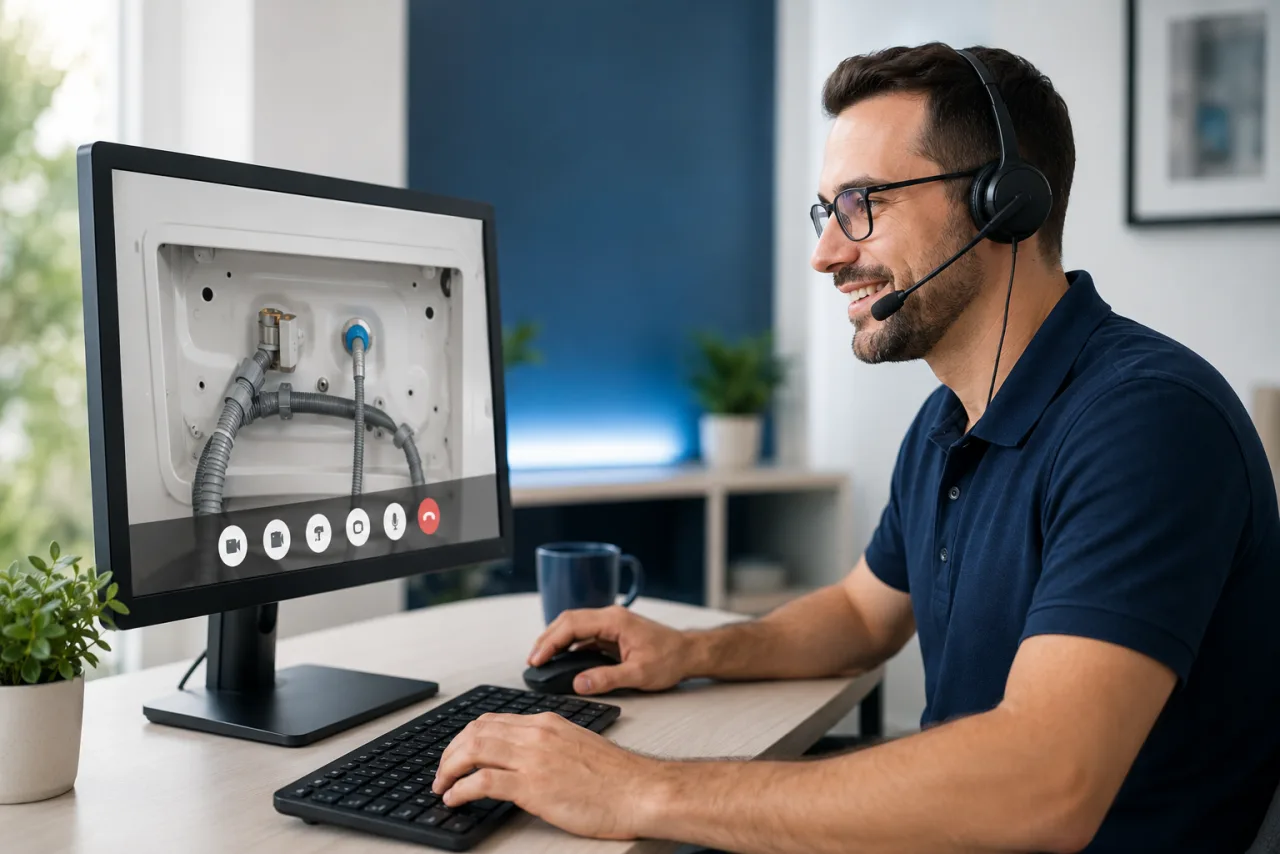
- Diagnose before dispatch. The customer shows the product live through their phone camera; the agent identifies the actual fault, the model and the part needed.
- Resolve what doesn’t need a visit. Setup and no-trouble-found issues are fixed on the call, removing them from the dispatch queue entirely.
- Arrive prepared. When a visit is genuinely needed, the technician shows up with the right part, the right skills and a documented diagnosis — the recipe for a first-time fix.
- Escalate from the field. If a technician on site hits something unfamiliar, a remote expert can see their view (by phone or hands-free smart glasses) and guide them, avoiding a second trip.
The compounding payoff
FTFR improvements compound. Each first-time fix removes a repeat dispatch (commonly $150–$500, and widely estimated at ~$1,000 all-in), frees capacity for genuinely new jobs, and — because Aberdeen ties >70% FTFR to higher retention — protects future revenue. And because aftermarket service margins run about 2.5× new-product margins (Deloitte), getting service right isn’t just cost control; it protects one of the most profitable parts of the business.
Measuring it honestly
Track FTFR alongside the metrics that reveal whether it’s real:
- Pre-visit remote-resolution rate — issues closed before any dispatch.
- Repeat-visit rate within 30 days — the truest test of a genuine first-time fix.
- Parts-accuracy rate — did the technician arrive with the right part?
- CSAT — to confirm faster fixes are also better experiences.
Before and after: a dishwasher service call
Consider a customer reporting that a dishwasher “won’t drain.”
Without visual triage: A technician is booked on the verbal description. They arrive, find the issue is a kinked drain hose behind the unit — a two-minute fix that didn’t need the part they brought. Worse, in many cases the technician arrives, diagnoses the real fault on site, and has to order a part and return a second time. One reported problem, two visits, a week of customer frustration.
With visual triage: Before dispatch, the customer shows the installation on camera. The agent spots the kinked hose and the customer fixes it live — no visit at all. When the camera instead reveals a failed drain pump, the agent confirms the exact part and model, so the technician arrives once, with the right part, and fixes it first time.
The difference between average and best-in-class first-time fix rates is largely this: seeing the problem before committing a truck.
Where pre-visit visual triage fits in the workflow
The highest-impact place to insert a visual session is the moment between “customer reports a problem” and “a technician is scheduled”:
- Intake captures the issue as usual.
- Visual triage confirms the actual fault, model and part — and resolves no-visit issues on the spot.
- Smart dispatch sends the right technician with the right part only when needed.
- Field escalation lets on-site technicians pull in a remote expert rather than booking a return trip.
Inserting that one step is what moves first-time fix from average toward best-in-class.
Frequently asked questions
What is a good first-time fix rate? Industry-average first-time fix rate is around 75%, with best-in-class organizations near 89% (Aberdeen Group). The right target depends on product complexity, but the gap is largely about diagnosing accurately before the technician arrives.
How does remote visual support improve first-time fix rate? By letting an expert see the problem before a visit, the team brings the right part, skills and information — or resolves it remotely. Accurate pre-visit diagnosis is the single biggest lever on first-time fix.
Why does first-time fix rate matter beyond cost? It drives loyalty. Aberdeen Group links a first-time fix rate above 70% to materially higher retention than below 70% — so each repeat visit erodes the customer relationship, not just the budget.
Key takeaways
- Industry-average FTFR is ~75% vs ~89% best-in-class; >70% FTFR is linked to higher retention (Aberdeen).
- Failed first visits are usually caused by blind, phone-based diagnosis.
- Remote visual triage diagnoses before dispatch, resolves no-visit issues, and sends prepared technicians — the core levers on FTFR.
- Better FTFR compounds: fewer truck rolls, more capacity, higher retention, and protected aftermarket margin (~2.5× new-product, Deloitte).
See our appliance & electronics visual support page, or read about reducing product returns and turning after-sales service into a profit center.
Request a demo to see it on your own service operation.