
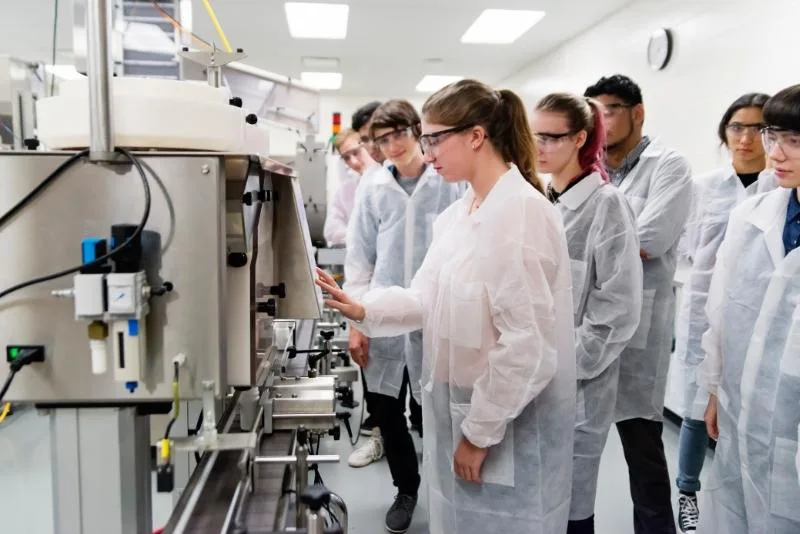
Many industries are expanding their operations and effectively improving their operating processes through Augmented Reality (AR) technology. This technology with a very innovative nature has found massive use in recent years in various fields. Augmented Reality offers many benefits for different industries. Moreover, Augmented Reality is consolidating its applications in the pharmaceutical industry. This industry has many complex tasks that require accurate fulfillment. Also, the quality of products must reach the highest standards. The importance of all the processes that make up this industry is quite big and mistakes lead to fatal results. Apart from the financial damages, above all, everything is directly related to the life of the consumers.
For what we mentioned above, let us take a closer look at how Augmented Reality is improving the pharmaceutical industry. Additionally, how is making it possible to improve the flow of various processes and offer faster and more efficient solutions?
1. Pharmaceutical Production
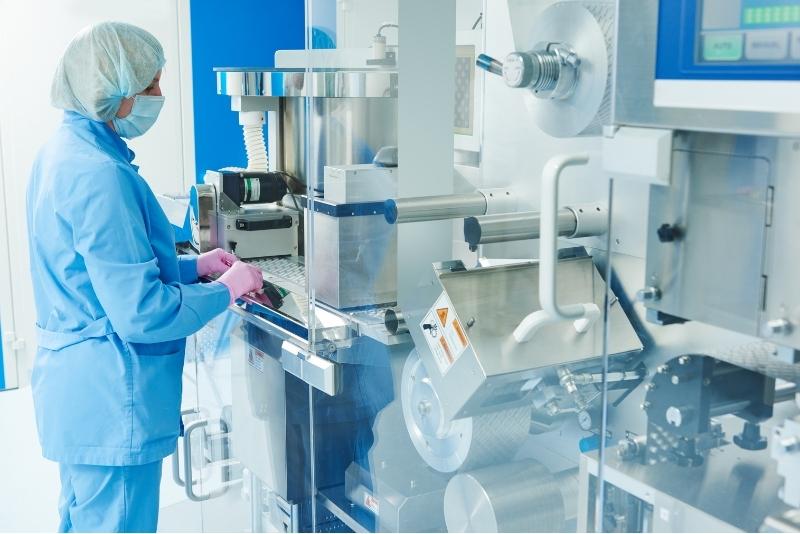
The production of pharmaceutical products is a very important process. A the same time requires a maximum commitment and great precision to eliminate even the smallest mistake. For unexpected challenges that may arise at this stage, AR comes for help. This technology enables the empowerment of remote assistance. AR-based remote assistance enables the direct connection of the center expert with the site where the production machines are located. The purpose of this remote connection is the real-time inspection of the machines by the experts. At the same time, experts provide appropriate guidance to site visitors for the minimization of human errors.
Now remote assistance eliminates the need for manuals and guides. Here we can mention platforms such as VSight Remote that offer AR Remote Assistance. Now, technicians can receive instructions and at the same time can proceed with the execution of other tasks. This is also improved through smart glasses that enable hand-free performance.
2. Augmented Reality for Enhanced Training through Augmented Reality
As we said above complex tasks of this industry require a large commitment. At the same time, a highly specialized workforce is needed. The lack of this workforce with the right knowledge is significantly alleviated thanks to AR Remote Assistance. Now located in different places it becomes possible for workers to receive the right education in real-time and in a more innovative and efficient way by replacing the traditional way of training. Furthermore, it is possible to reduce the high costs that employee training usually has.
A properly educated workforce is a key to success enabling increased productivity of complete processes as a whole. An opportunity for embracing remains VSight, which already makes it possible to have training rooms and connect the expert in real-time with inexperienced workers in order to educate this workforce. Experts thanks to this platform have the opportunity to enhance this training process with images or documents, but also with AR annotations in the real environment by presenting the issues as they are in reality.
3. Improving Pharmaceutical Operational Processes through Augmented Reality
Problems with machine downtime, untrained staff, and the lack of finding efficient solutions are just some of the reasons that lead to an increase in costs and a completely unproductive process. Through AR-based remote assistance, it is now possible to solve various problematic issues that at the same time affect the elimination of unproductive situations and increase the quality of final production. Expert guidance plays a key role in reducing errors that can come from a lack of knowledge. In this way, the creation of a collaboration between these two actors, experts, and employees of the site, thus forming a duo that works towards the same tasks. All this fully digitized process makes possible another benefit that enables managers through archived sessions to evaluate the performance of the site workforce and proceed with the following procedures.
AR technology is strongly influencing by bringing radical changes in the way businesses in this field operate. Thanks to this technology it is possible to analyze and find the most efficient solutions for various problems. These solutions are not temporary but are solutions that are documented thanks to the remote assistance platform and stay there in case of recurrence of the issue or for further purposes such as training of the workforce. Apart from some of the concrete issues mentioned above, there are still many premises for other cases of use of this technology in the pharmaceutical industry. AR technology has the right potential to provide to this industry many advantages, bring another reality with powerful changes, and at the same time enable a very productive work process.
Frequently asked questions
How is augmented reality used in the pharmaceutical industry? AR powers remote assistance that connects a central expert directly with the site where production machines are located, enabling real-time inspection and guidance. It is applied across pharmaceutical production, workforce training, and operational processes to minimize human errors and speed up workflows.
How does AR remote assistance improve pharmaceutical training? AR remote assistance lets experts connect in real time with inexperienced workers in virtual training rooms, replacing traditional training methods. Experts can enhance the session with images, documents, and AR annotations placed in the real environment, which helps reduce the high costs employee training usually carries.
Do pharmaceutical technicians need to keep their hands free while using AR support? Yes, and AR remote assistance supports this through smart glasses that enable hands-free performance. Technicians can receive instructions while proceeding with the execution of other tasks. VSight runs on iOS, Android, Windows and smart glasses including RealWear, Vuzix, Epson and Rokid.
Can pharmaceutical AR sessions be recorded for later use? Yes, sessions are archived so managers can evaluate the performance of the site workforce and follow up on procedures. The documented solutions stay available in case an issue recurs or for training the workforce later.